If you have used a smartphone, streamed a film, searched the web, withdrawn cash from an ATM, or booked a plane ticket today, you have almost certainly interacted with Linux. It is, by a large margin, the most widely deployed operating system in the history of computing, and yet most people who rely on it every day have never heard its name. Linux is the quiet machinery beneath the modern internet, the engine inside Android phones, the brain of home routers, industrial robots, smart televisions, and the world's fastest supercomputers. This book is about understanding that machinery: how it works, where it came from, and how to use it well.
- Define Linux and distinguish between the kernel, the operating system, and a distribution
- Compare Linux with Unix, macOS, and Windows at both a technical and philosophical level
- Explain why Linux has come to dominate servers, supercomputers, and embedded systems
- Describe the principles of the free and open source software movement
- Justify the GNU/Linux naming distinction and its historical significance
What Exactly Is Linux?
Ask ten engineers what "Linux" means and you will get at least three different answers. The confusion is understandable, because the word is used to describe several related but distinct things.
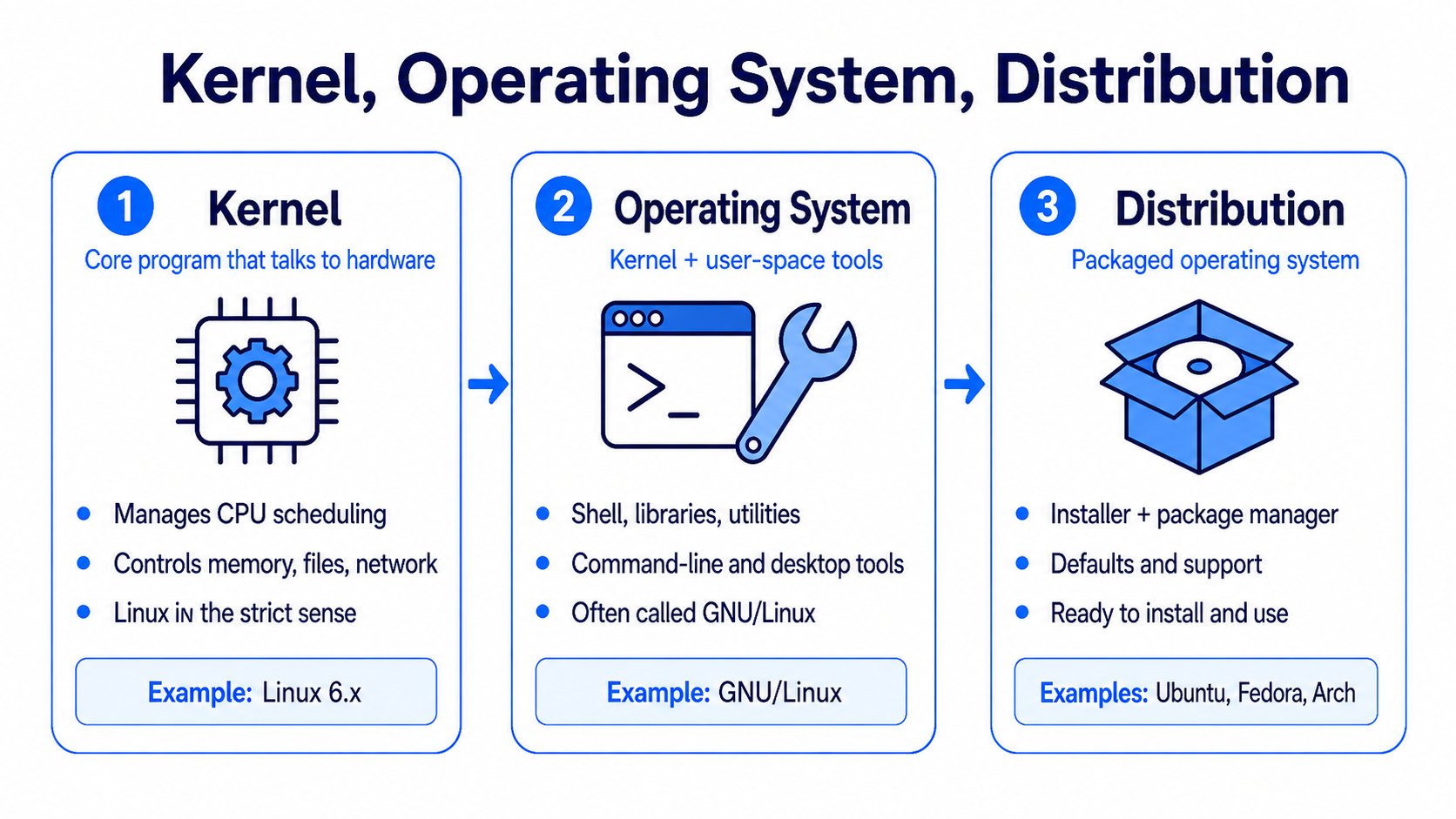
Strictly speaking, Linux is a kernel: the central piece of software that sits between hardware and everything else. It is the program that decides which process gets to run on which CPU, how memory is allocated, how files are stored on disk, and how network packets are routed. When Linus Torvalds announced his project in August 1991, this kernel was the whole of what he called Linux. It did not include a shell, an editor, a compiler, or any of the utilities we now take for granted.
In practice, however, most people use "Linux" more loosely to mean the entire operating system built around that kernel: the command interpreter, the libraries, the thousands of user-space tools, and often a graphical desktop as well. Richard Stallman, the founder of the GNU project, famously insists on the term GNU/Linux to acknowledge that the majority of those user-space tools (bash, gcc, coreutils, glibc) were written by the GNU project years before the kernel existed. Whether you find this pedantic or important is a matter of taste, but the history it points to is real.
Finally, the complete packaged experience most people install, with an installer, a set of defaults, a package manager, and long-term support, is called a distribution, or distro. Ubuntu, Debian, Fedora, Arch, and Alpine are all distributions. They share the same kernel but differ enormously in philosophy, tooling, and target audience.
Kernel, Operating System, Distribution
To picture these layers, imagine the kernel as the engine of a car, the operating system as the engine plus the transmission, wheels, brakes, and steering column, and the distribution as the fully assembled, painted vehicle sitting on the showroom floor, ready to drive away.
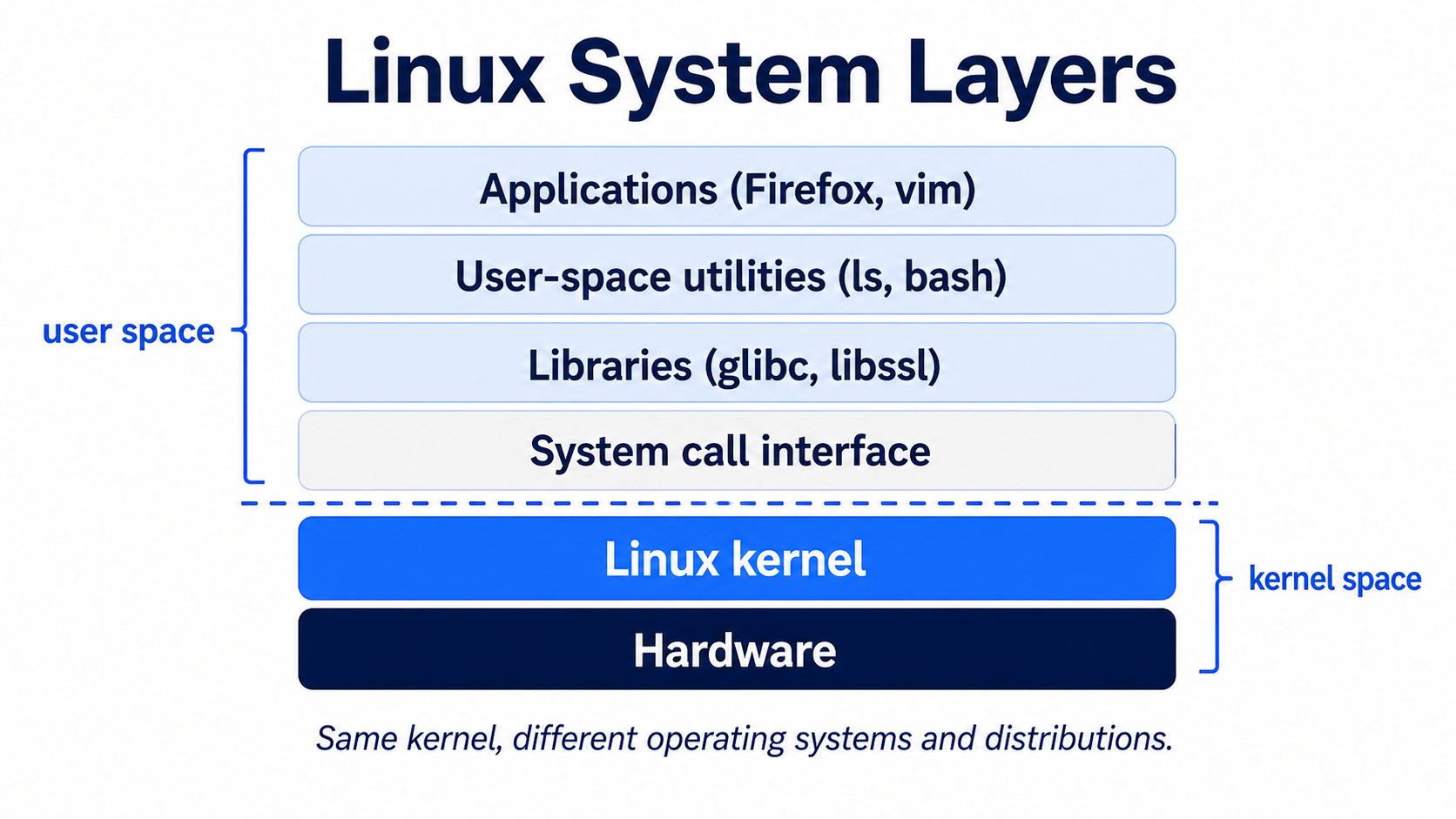
Everything above the system call interface is user space. Everything below it is kernel space. We will return to this boundary many times. It is one of the most important distinctions in the whole of systems programming.
Table 1.1: The three layers of a Linux system
| Layer | What It Is | Example |
|---|---|---|
| Kernel | Core program that talks to hardware | Linux 6.x |
| Operating system | Kernel + userland utilities | GNU/Linux |
| Distribution | Curated OS + package manager + installer | Ubuntu, Fedora, Arch |
Linux, Unix, macOS, and Windows
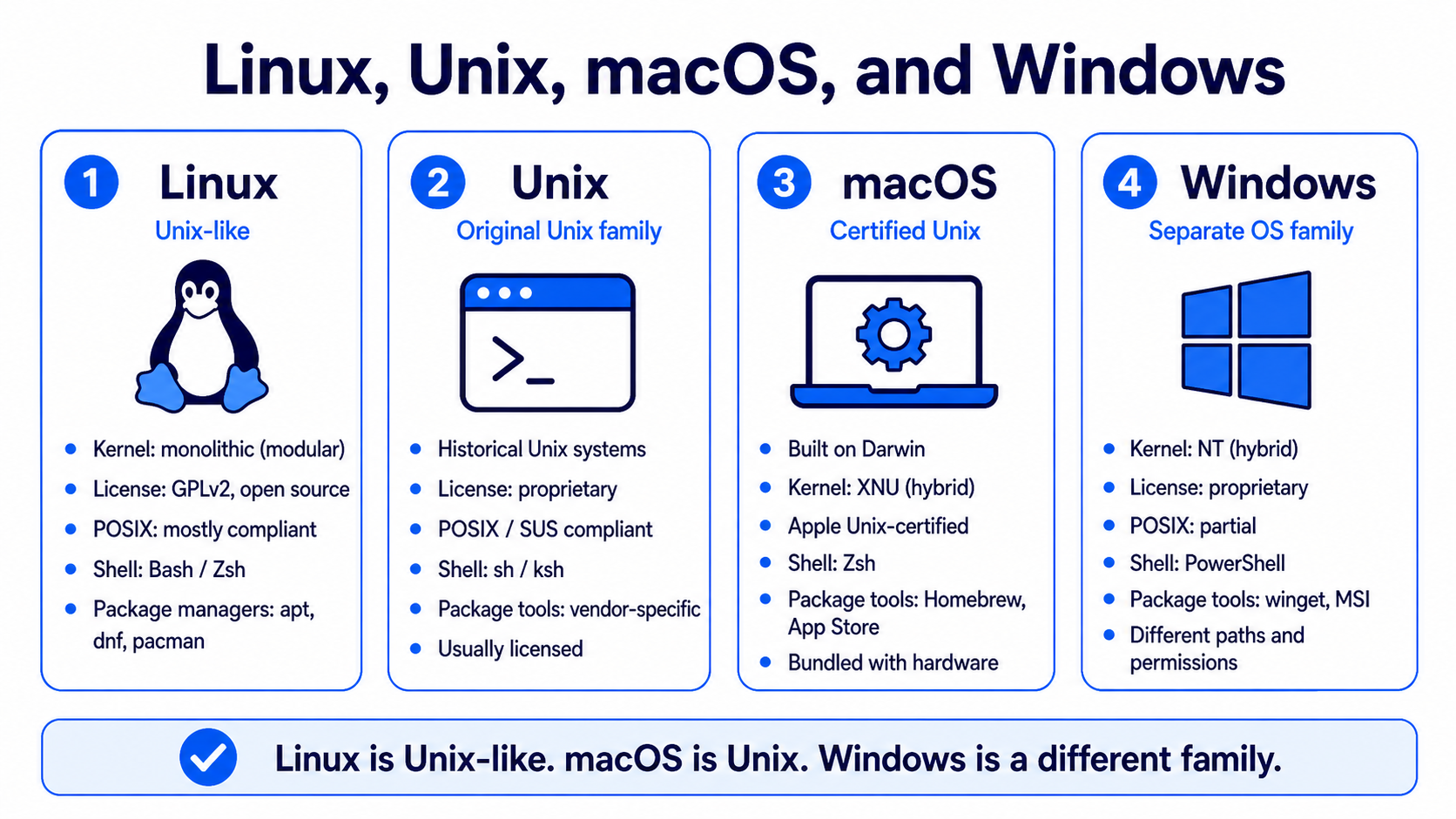
Linux is a Unix-like operating system. It was deliberately designed to behave like the Unix systems of the 1970s and 1980s, following the specifications of POSIX and the Single Unix Specification, without using any of the original AT&T source code. That is an important legal distinction. Linux shares no code with historical Unix, but it implements essentially the same interface: the same system calls, the same file layout, the same philosophy of small composable tools.
macOS, by contrast, really is Unix. Underneath the polished Aqua interface is Darwin, whose kernel (XNU) is a hybrid of Mach and FreeBSD. Apple holds an official Unix certification for macOS. This is why so much of the shell knowledge in this book transfers directly: if you can drive a Linux terminal, you can drive a macOS terminal.
Windows belongs to a completely different family. Its kernel (NT), its file system (NTFS), its path conventions (backslashes, drive letters), and its permissions model grew up independently in the 1990s under Dave Cutler at Microsoft. The two worlds have been slowly converging (Windows now ships with the Windows Subsystem for Linux, and PowerShell borrows ideas from Unix pipes), but they remain culturally and technically distinct.
Why Linux Matters
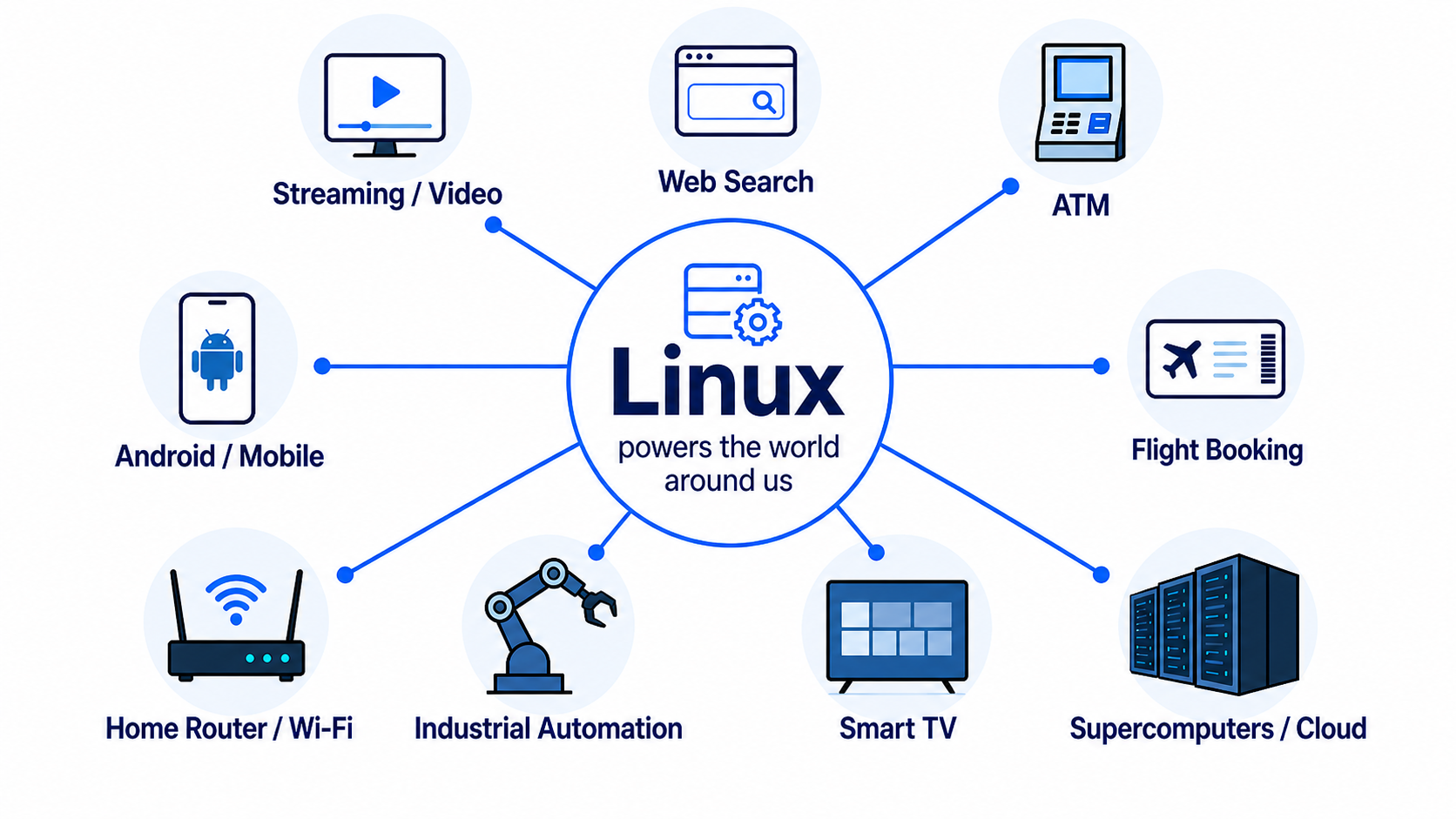
The reach of Linux in 2026 is almost absurd. Every one of the top 500 supercomputers in the world runs Linux, and has done on every list since 2022. Of the websites whose server operating system W3Techs can identify, 61.7% run Linux and a further 30% run some other Unix it cannot name more precisely. Every mainstream cloud provider (AWS, Google Cloud, Azure) is built on Linux underneath. Android, which powers more than three billion phones, is Linux with a custom userland. Kindles, Roku boxes, smart fridges, Tesla cars, the in-flight entertainment system on most airlines, and the International Space Station all run Linux.
Why? Several reasons compound.
First, it is free. Not merely free of charge, but free to modify, redistribute, audit, and embed in your own products without asking anyone's permission. For a hardware manufacturer shipping a router, the alternative was paying per-unit licensing to a commercial Unix vendor. Linux removed that cost entirely.
Second, it is portable. Linux runs on everything from tiny ARM microcontrollers with a few megabytes of RAM to IBM mainframes with thousands of cores. Few operating systems have been ported to as many architectures.
Third, it is transparent. When something goes wrong, you can read the source code. You can attach a debugger, trace a system call, recompile the kernel with extra logging. There are no black boxes. For engineers, this transparency is almost addictive once you experience it.
Fourth, it is the common tongue of modern infrastructure. The tools, conventions, and skills you learn on Linux transfer across almost every serious computing environment outside the Microsoft and Apple consumer worlds.
The Open Source Philosophy
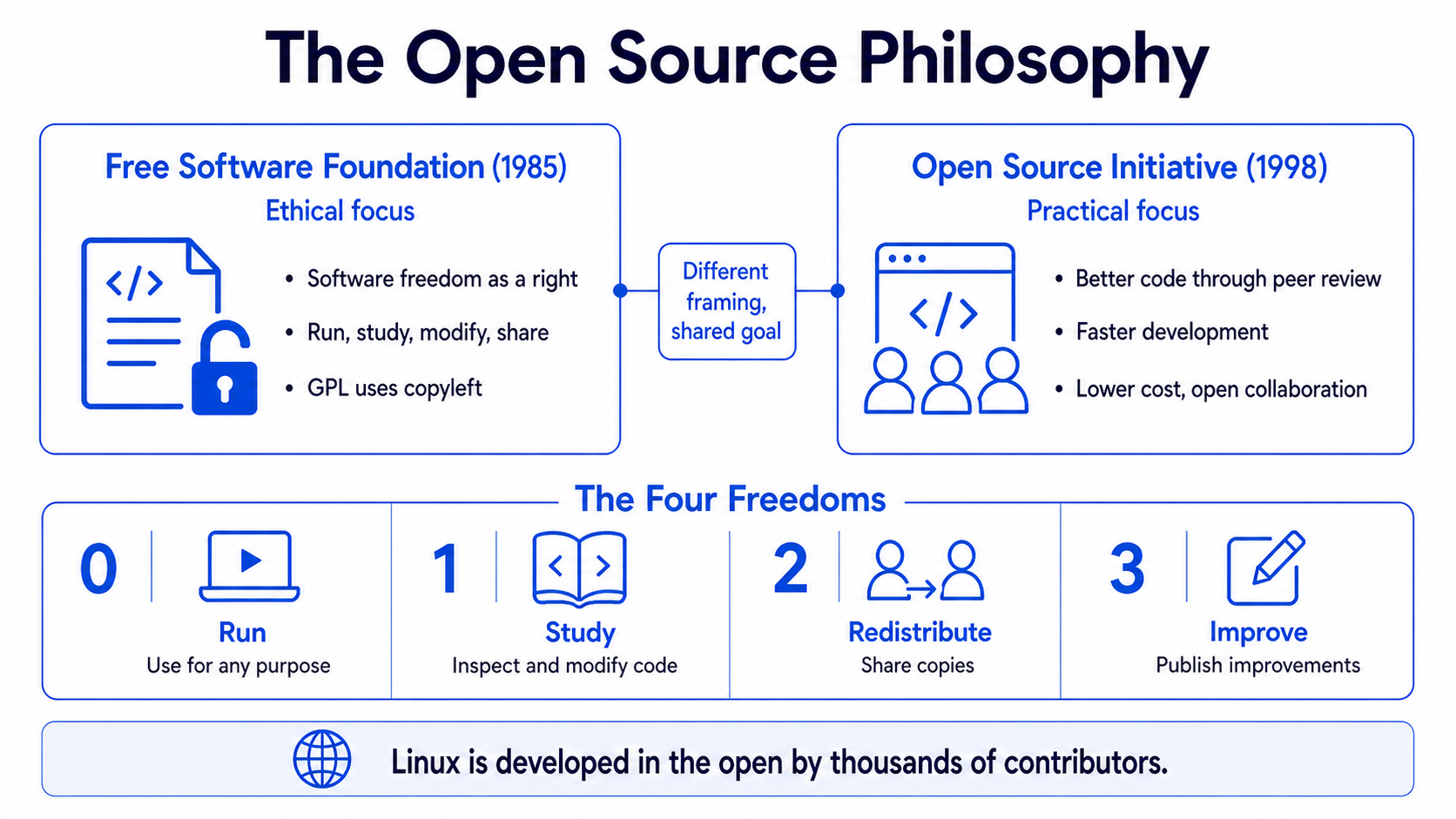
Linux is the crown jewel of the free and open source software (FOSS) movement, but it is not the only jewel. The movement has two intertwined strands.
The Free Software Foundation, founded by Richard Stallman in 1985, frames software freedom as an ethical matter. Users should have the right to run, study, modify, and share software. The GNU General Public License (GPL), which Linux uses, enforces this by requiring that anyone who distributes a modified version must also distribute the source code under the same terms. This is called copyleft, and it is controversial precisely because it is effective.
The Open Source Initiative, founded in 1998, emphasises the pragmatic benefits: better code through peer review, faster development, lower costs. The two camps agree on most things but disagree about framing. Stallman would say "free software"; Eric Raymond would say "open source". Most of the rest of us just say "it's on GitHub" and move on.
Either way, the practical result is that Linux is developed in the open, by thousands of contributors across hundreds of companies and universities, with every change visible in a public mailing list and every decision debated in front of the world. It is one of the most impressive examples of large-scale human cooperation we have.
Table 1.2: The four freedoms of free software (Stallman/FSF)
| # | Freedom | Meaning |
|---|---|---|
| 0 | Run | Use the program for any purpose |
| 1 | Study | Examine and modify the source code |
| 2 | Redistribute | Share copies with others |
| 3 | Improve | Release modified versions to the public |
The GNU/Linux Distinction
Should you call it Linux or GNU/Linux? The pedantic answer is that the kernel is Linux and the rest of the system, the compiler, the shell, the core utilities, is overwhelmingly GNU, so the combined system should be called GNU/Linux. The practical answer is that nearly everybody says Linux, the official project is called Linux, and this book will mostly follow that convention.
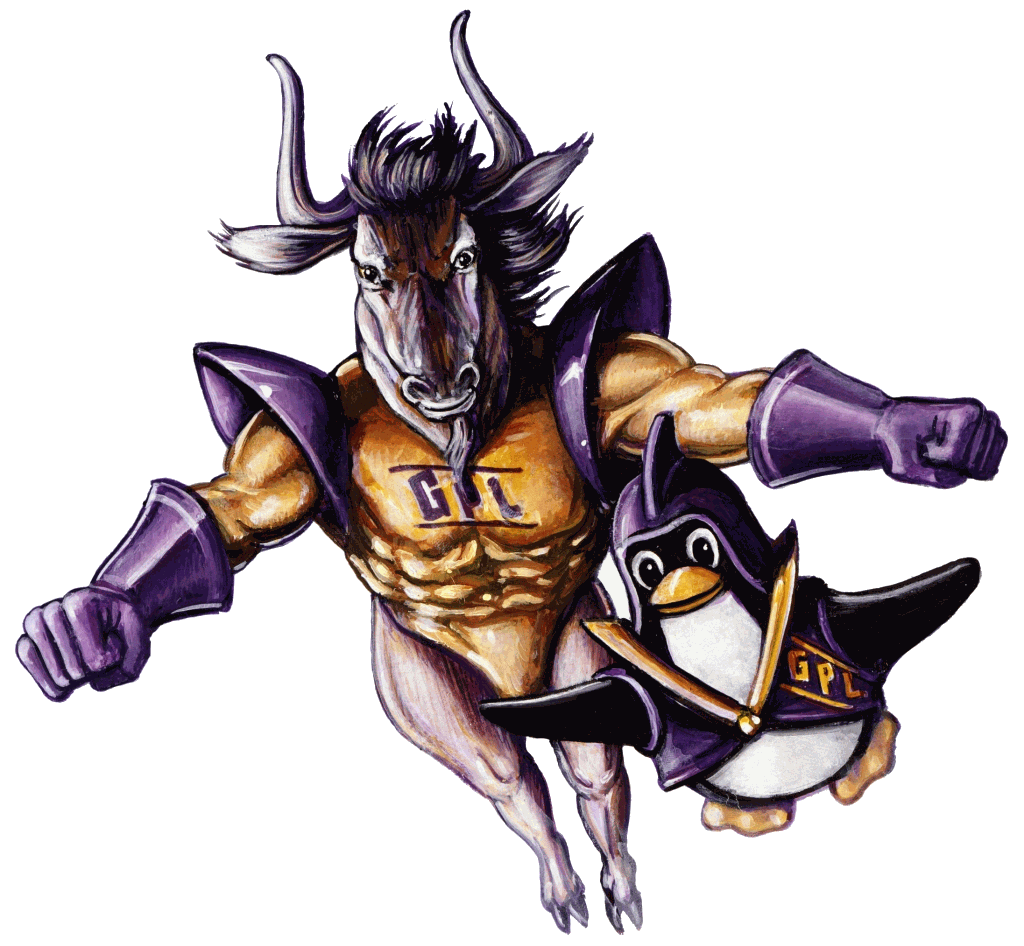
But it is worth pausing to acknowledge Stallman's point. Without the GNU project, the kernel Torvalds wrote in 1991 would have had nothing to run. Without the kernel, the GNU project's own half-finished Hurd kernel would probably have remained a curiosity. The two halves found each other at exactly the right moment, and what we now call Linux is the result of that lucky collision.
What You Will Learn in This Book
The chapters ahead take you from the absolute basics, what the shell is and how files are laid out, through system administration, networking, and security, up to modern containerised and observable systems. By the time you reach the end, you should be able to sit down at any Linux machine, orient yourself quickly, diagnose problems, and build useful things. You will not know everything; nobody does. But you will speak the language, understand the design, and know where to look when you don't.
Linux is not just software. It is a culture, a philosophy, and a set of habits accumulated over more than half a century of Unix tradition. Welcome to it.
