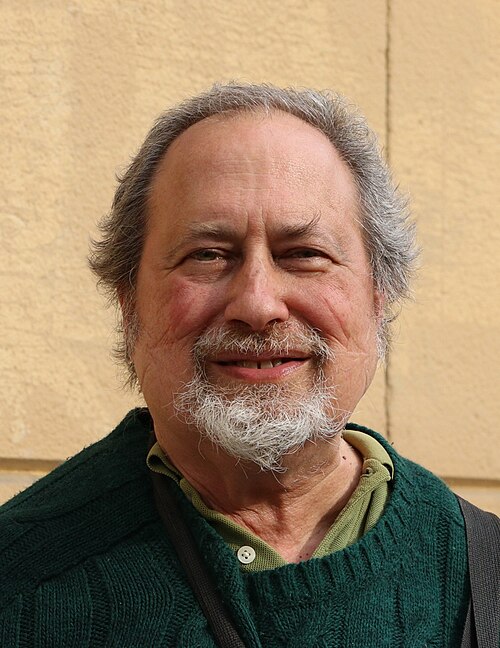
b. 1953, New York City · Founder of GNU and the FSF; author of GCC, Emacs, the GPL
Also known as: Stallman, RMS
Richard Stallman launched the GNU Project in 1983 to build a free Unix-like operating system, and wrote (or led) GNU Emacs, GCC, the GNU Debugger, and several coreutils programs that ship on every Linux distribution.
He authored the GNU General Public License, the copyleft licence under which the Linux kernel and most GNU software is released. The combination of the GNU userland with the Linux kernel produced the first complete free Unix-like system. He founded the Free Software Foundation in 1985.
Video
Related people: Linus Torvalds, Eric Raymond
Works cited in this book:
Discussed in:
- Chapter 1: Introduction: What Is Linux? · Linux, Unix, macOS, and Windows
- Chapter 2: A History of Unix and Linux · 1984: Richard Stallman and GNU
