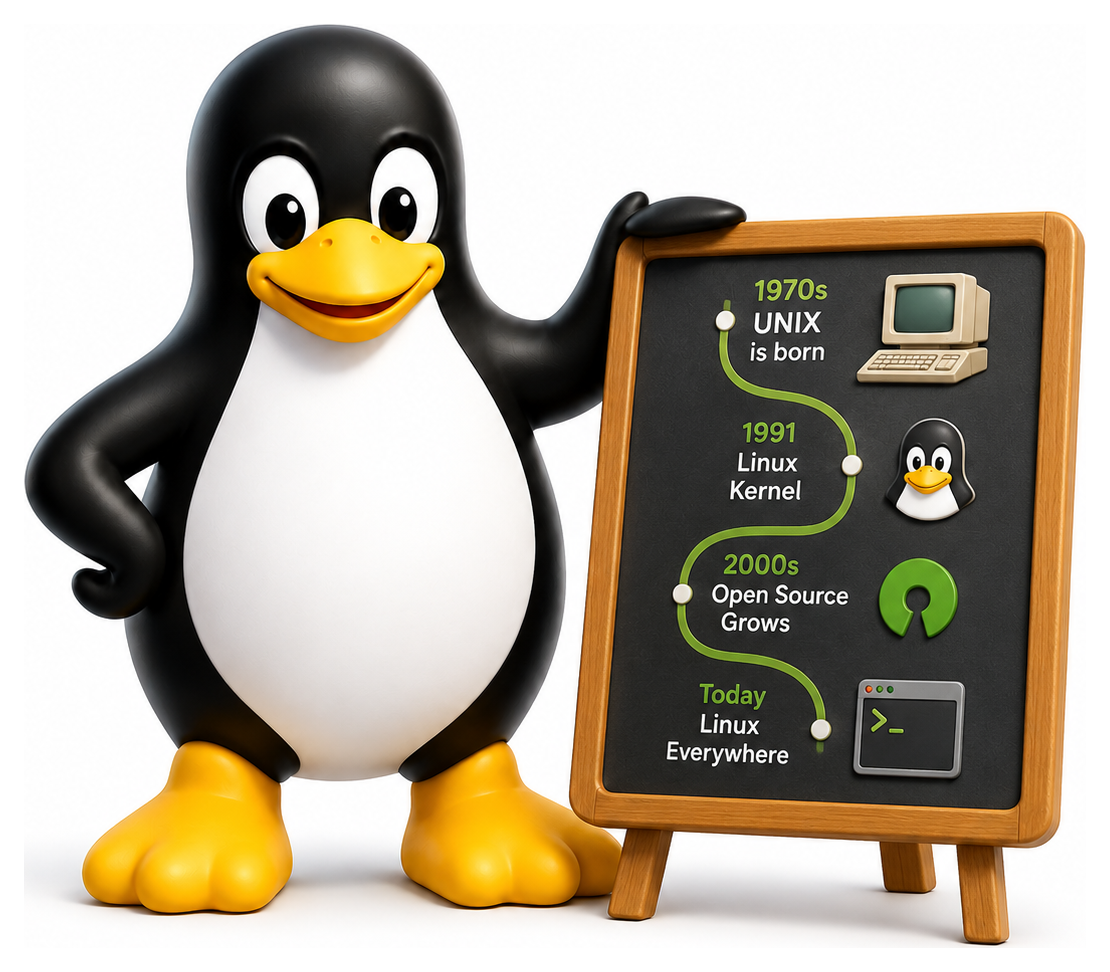
Every operating system carries its history in its bones. The commands you type at a modern Linux terminal in 2026 (ls, grep, cat, sed) were named by people who are now in their eighties, on hardware that has long since been scrapped, in a corporate research lab in New Jersey. To understand why Linux is the way it is, you have to start in the late 1960s, before Linus Torvalds was even born.
- Trace the lineage of Unix from Multics through Bell Labs to modern Linux
- Identify the contributions of Ken Thompson, Dennis Ritchie, Richard Stallman, and Linus Torvalds
- Explain the legal and cultural significance of the BSD lawsuit and the GPL
- Describe how the Linux kernel is developed and who develops it today
- Situate today's distributions within the broader Unix family tree
Multics: The Ambitious Predecessor
In 1964, three organisations (MIT, Bell Labs, and General Electric) embarked on a joint project called Multics, short for Multiplexed Information and Computing Service. The goal was breathtaking for its time: a time-sharing operating system that could serve hundreds of users simultaneously, treating computing as a utility much like electricity. Multics introduced ideas that are now universal: hierarchical filesystems, dynamic linking, memory-mapped files, per-process security.
But it was enormous, slow to develop, and written in PL/I, a complex language that made the project difficult to finish. By 1969, Bell Labs had concluded it was not getting enough return on its investment and pulled out. Multics itself would continue until 2000, but for the Bell Labs researchers who had worked on it, the project was over.
Bell Labs, 1969: Unix Is Born
Among those researchers was Ken Thompson, who missed the collaborative programming environment Multics had offered. When he found an unused PDP-7 minicomputer in a corner of the lab, he decided to build something smaller, simpler, and more elegant: a system one person could understand. Working alongside Dennis Ritchie, Rudd Canaday, and others, he wrote an operating system that was a deliberate rebuke of Multics' complexity. Brian Kernighan is said to have coined the name Unics as a pun ("uniplexed" versus "multiplexed"), which soon became Unix.
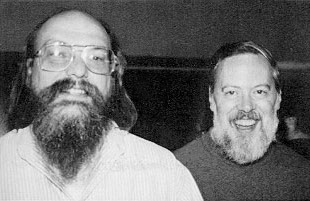
The original Unix was written in PDP-7 assembly. In 1971 it was ported to the larger PDP-11, and in 1973 Ritchie rewrote most of it in a new programming language he had designed partly for the purpose: C. This was a radical decision. Operating systems had always been written in assembly because performance mattered and high-level languages were thought to be too inefficient. But C was close enough to the metal, and the benefit of a portable, readable kernel turned out to be immense. Every operating system you use today, Linux included, is a descendant of that decision.
The early Unix papers, published in the Communications of the ACM Ritchie, 1974 and at academic conferences, made the system famous. AT&T, Bell Labs' parent, was under a 1956 consent decree that forbade it from entering the computer business, which meant Unix could not be sold commercially. So it was licensed to universities for a nominal fee, often just the cost of the tape. Generations of computer science students learned Unix on VAX minicomputers in the late 1970s and 1980s.
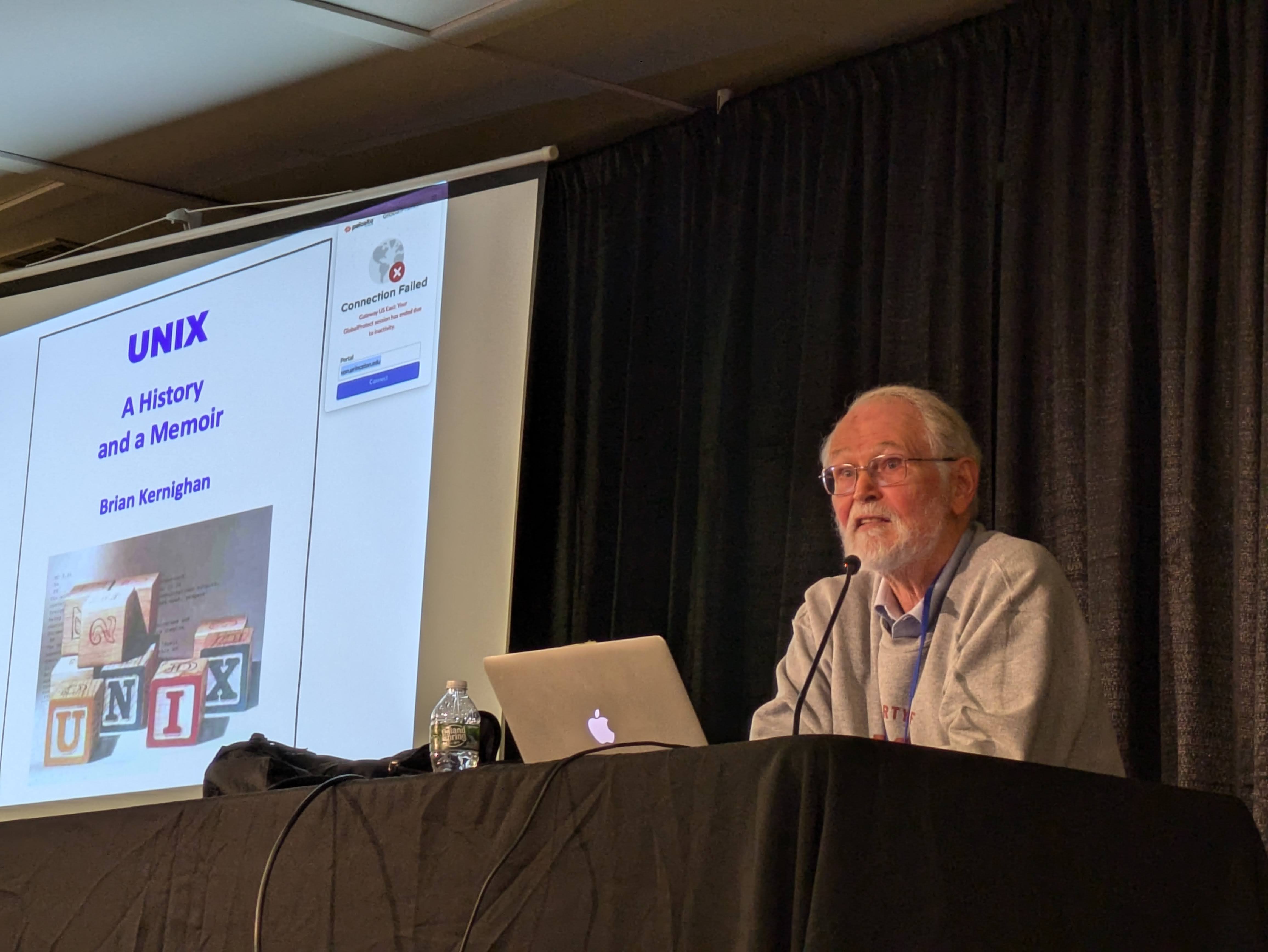
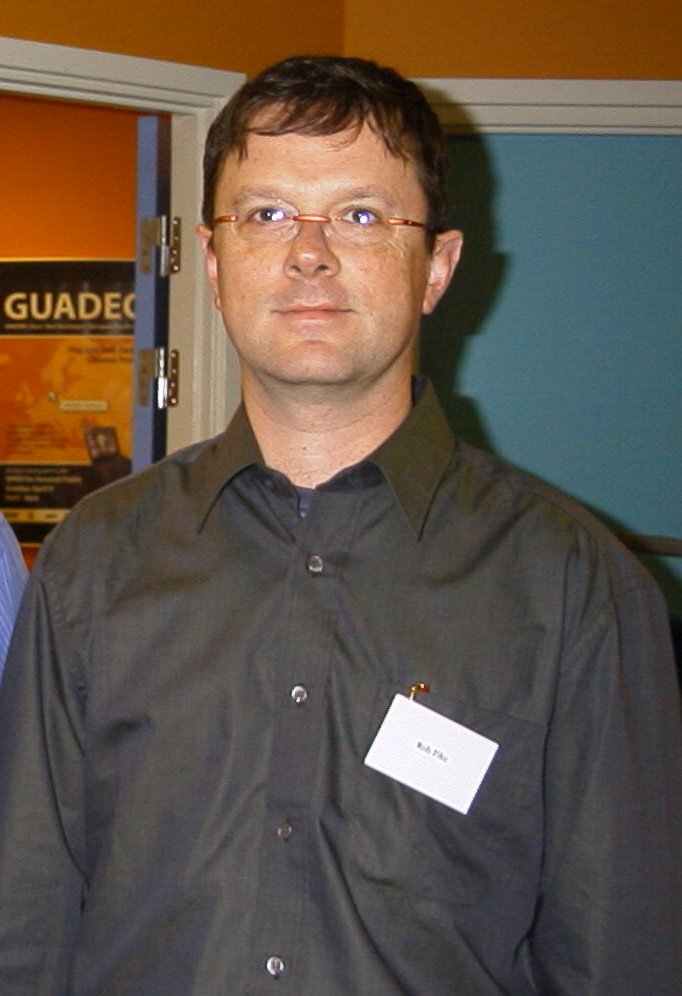
The Bell Labs team also articulated what became known as the Unix philosophy McIlroy, 1978: write programs that do one thing well, expect the output of every program to become the input to another, and build by composition rather than by adding features to monoliths. This design ethos still drives Linux today.
BSD: The University Fork
The most important academic recipient was the University of California, Berkeley. Students there, most famously Bill Joy, began extending Unix with their own improvements: the vi editor, the C shell, TCP/IP networking, virtual memory, and the Fast File System. By 1977 these additions had coalesced into a distribution of their own, the Berkeley Software Distribution, or BSD.
BSD soon outgrew its origins. The DARPA-funded 4.2BSD release in 1983 introduced the sockets API that still underpins networking on every modern computer. By the late 1980s there were effectively two Unixes in the world: AT&T System V (commercial, buttoned-up) and BSD (academic, adventurous). They shared ancestry but had diverged significantly, and the so-called Unix wars of the late 1980s saw vendors pick sides.
BSD's future took a dark turn in 1992, when AT&T's Unix Systems Laboratories sued Berkeley, claiming BSD still contained proprietary AT&T code. The lawsuit took two years to resolve. By the time BSD emerged legally free in 1994, a young Finnish student had already filled the vacuum with something new.
GNU: The Free Software Vision
Meanwhile, at MIT, Richard Stallman had become increasingly frustrated with the closing of the software world. In the early 1970s, sharing source code freely among hackers had been normal; by the early 1980s, non-disclosure agreements and proprietary binaries had become the norm. In 1983 Stallman announced the GNU project, a recursive acronym for "GNU's Not Unix", whose goal was to build a complete, freely redistributable Unix-like operating system from scratch. Two years later, his GNU Manifesto Stallman, 1985 laid out the moral and technical case for what would become the free software movement.
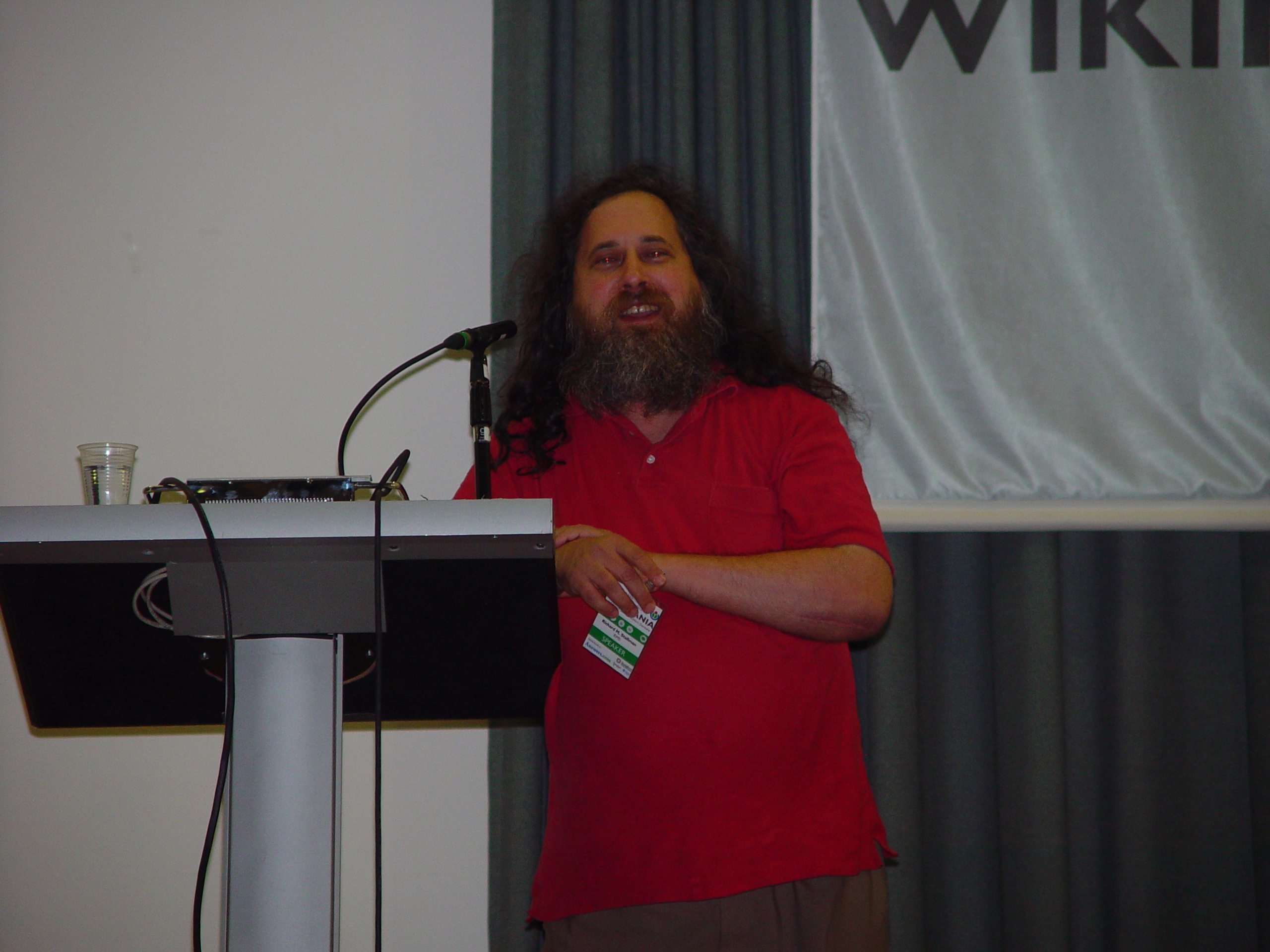
In 1985 he founded the Free Software Foundation and wrote the GNU General Public License, the GPL, whose radical innovation was copyleft: you may do anything you like with the code, including selling it, on the single condition that you pass the same rights on to anyone you distribute it to. You cannot take GPL code, modify it, and release a closed-source version.
By the late 1980s the GNU project had produced most of the user-space tools a Unix system needs: the GCC compiler, the Emacs editor, Bash, the GNU coreutils (ls, cp, mv, rm, cat, and dozens of others), and the GNU C Library. What it lacked was a kernel. A project called GNU Hurd, started in 1990, was meant to fill that gap but proved difficult to finish. It is still, astonishingly, not quite done in 2026.
1991: Linus Torvalds and a Message on Usenet
On 25 August 1991, a 21-year-old computer science student at the University of Helsinki posted the following message Torvalds, 1991 to the comp.os.minix Usenet group:
From: torvalds@klaava.Helsinki.FI (Linus Benedict Torvalds)
Newsgroups: comp.os.minix
Subject: What would you like to see most in minix?
Date: 25 Aug 91 20:57:08 GMT

Hello everybody out there using minix -

I'm doing a (free) operating system (just a hobby, won't be big and
professional like gnu) for 386(486) AT clones. This has been brewing
since april, and is starting to get ready.
Linus Torvalds had been using Minix, a small teaching Unix written by Andrew Tanenbaum, on his new 386 PC. He found its limitations frustrating and decided to write his own kernel as a learning exercise. Within weeks he released version 0.01, then 0.02. By the end of 1991 other hackers around the world were submitting patches. In early 1992 he relicensed the kernel under the GPL, a pivotal decision that made it legally compatible with the GNU tools.
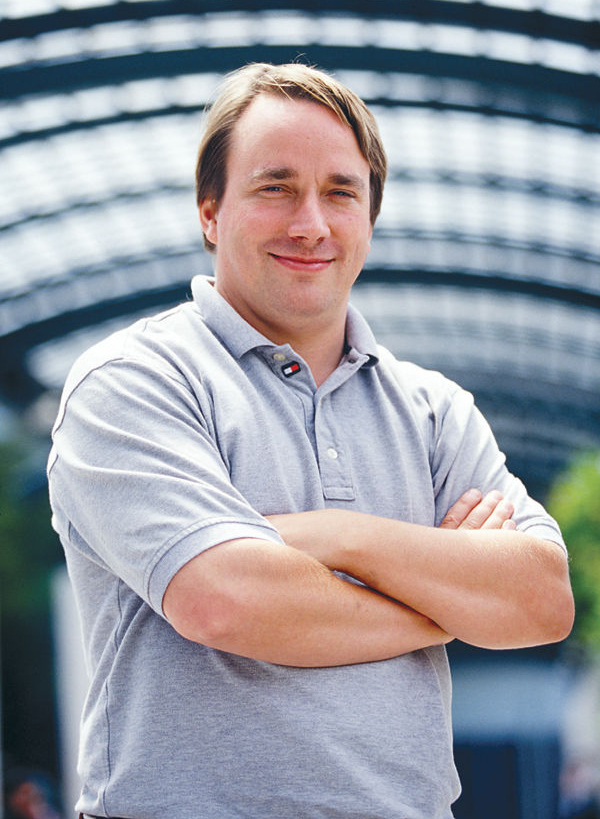

The combination was irresistible: GNU had a complete userland but no kernel; Linus had a kernel but no userland. Put them together and you had, for the first time, a complete, freely redistributable Unix-like system that ran on cheap commodity hardware. The Linux kernel plus the GNU tools equalled a real operating system.
The Kernel Mailing List and the Development Model
From the very beginning, Linux development happened in public on the Linux Kernel Mailing List (LKML). There were no closed meetings, no private betas, no confidentiality agreements. Anyone could submit a patch; Linus would accept it, reject it, or ignore it, often with characteristically direct feedback. The model was simultaneously anarchic and ruthlessly meritocratic.
Eric Raymond's 1997 essay The Cathedral and the Bazaar famously contrasted the Linux development style (open, chaotic, fast, "release early and often") with the cathedral-style development of traditional software. The essay became a manifesto for the nascent open source movement and is credited with inspiring Netscape to release the source code of its browser in 1998, which eventually became Firefox.
The Linux Explosion: 1993-2005
The 1990s saw distributions emerge to solve the problem of turning a bare kernel and a bag of GNU tools into something a mortal could install. Slackware (1993) was the first to gain widespread use. Debian, founded by Ian Murdock in 1993, introduced the idea of a community-governed distribution with a rigorous package management system. Red Hat, founded in 1995, became the first commercially successful Linux company and went public in 1999 to enormous fanfare. SUSE served the European market. Mandrake made Linux friendlier for desktops.
By the late 1990s Linux was running production web servers at IBM, Oracle, and a new company called Google. IBM's 2000 announcement of a billion-dollar investment in Linux marked the moment when "Linux" stopped being a hacker curiosity and became enterprise infrastructure. In 2004 the Ubuntu distribution, founded by Mark Shuttleworth, made Linux desktops approachable for ordinary users for the first time.
Table 2.1: Linux kernel milestones and source size
| Year | Release / event | Approximate source size |
|---|---|---|
| 1991 | Linux 0.01 initial release (Linus Torvalds) | ~10,000 lines of C |
| 1994 | Linux 1.0, first stable release | ~176,000 lines |
| 1996 | Linux 2.0, SMP support | ~400,000 lines |
| 1999 | Linux 2.2 | ~1.8 million lines |
| 2003 | Linux 2.6 | ~5.7 million lines |
| 2011 | Linux 3.0 | ~14.6 million lines |
| 2015 | Linux 4.0 | ~19 million lines |
| 2019 | Linux 5.0 | ~26 million lines |
| 2024 | Linux 6.x | ~36 million lines |
Table 2.2: Major Linux milestones
| Year | Milestone |
|---|---|
| 1991 | Linus posts 'just a hobby' announcement on comp.os.minix |
| 1992 | Kernel relicensed to GPLv2 |
| 1993 | Slackware and Debian founded |
| 1994 | Linux 1.0 released; first Red Hat Linux |
| 1995 | Red Hat Software Inc. incorporated (merger) |
| 1996 | KDE project started; kernel 2.0 adds SMP |
| 1998 | IBM, Oracle, Netscape embrace Linux |
| 2003 | SCO sues IBM over Unix code (eventually fails) |
| 2004 | Ubuntu 4.10 'Warty Warthog' released |
| 2008 | Android launches, built on the Linux kernel |
| 2011 | Linux on 91% of Top 500 supercomputers |
| 2017 | Linux reaches 100% of Top 500 |
| 2020 | Microsoft ships a Linux kernel inside Windows (WSL2) |
Table 2.3: Early distributions and what they begat
| Distribution | Year | Descendants |
|---|---|---|
| Slackware | 1993 | SUSE, openSUSE |
| Debian | 1993 | Ubuntu, Mint, Kali, Raspberry Pi OS |
| Red Hat Linux | 1994 | Fedora, CentOS, RHEL, Rocky, Alma |
| Arch | 2002 | Manjaro, EndeavourOS, SteamOS |
| Gentoo | 2002 | ChromeOS (partial), Funtoo |
SCO, Android, and the Modern Landscape
The 2000s brought one more legal drama. The SCO Group sued IBM in 2003, claiming that Linux contained Unix code to which SCO held the rights. The case dragged on for years before collapsing ignominiously. SCO turned out not to own what it claimed, and the litigation eventually helped cement Linux's legal standing.
In 2008 Google launched Android, which used a modified Linux kernel with a bespoke user-space framework written mostly in Java. By 2015 Android had overtaken Windows as the world's most-used operating system by unit shipments. Most Android users have never heard of Linux, but every one of their phones is running it.
Today the Linux kernel is maintained by the Linux Foundation under Linus Torvalds' continuing leadership, with thousands of developers contributing from companies including Intel, Red Hat (now owned by IBM), Google, Huawei, Meta, AMD, and ARM. A new stable release comes out roughly every two months. The project has over thirty million lines of code, larger than any other piece of software ever built cooperatively by humans.
A Family Tree
Every modern Unix-like operating system sits somewhere on a branching family tree that starts in Ken Thompson's PDP-7 workspace in 1969.
The commands you will learn in this book are direct descendants of tools written by Thompson, Ritchie, Joy, and Stallman. When you type ls, you are running a program whose interface was designed fifty-five years ago. That continuity is one of the most remarkable things about Unix: skills learned in 1975 are still useful today. No other area of computing can say that.
Table 2.4: Simplified Unix family tree
| Branch | Key Descendants | Status |
|---|---|---|
| Research Unix (Bell Labs) | v6, v7 | Historical |
| BSD (Berkeley) | FreeBSD, OpenBSD, NetBSD, macOS (Darwin) | Active |
| System V (AT&T) | Solaris, AIX, HP-UX | Legacy / Commercial |
| GNU | Hurd (kernel unfinished) | Experimental |
| Linux (Torvalds) | Debian, Red Hat, Android, ChromeOS, ... | Dominant |
| Minix | Inspired Linux; still maintained | Research |
