Fedora
A community-driven Linux distribution sponsored by Red Hat.
Fedora is a community-driven distribution that serves as the upstream for Red Hat Enterprise Linux. New free-software technology often lands in Fedora first and then flows downstream into RHEL and CentOS Stream after stabilisation. Fedora releases every six months with each release supported for thirteen months — a faster, less conservative cadence than Debian or Ubuntu LTS, which has made Fedora a popular choice for developers and power users who want recent versions of everything.
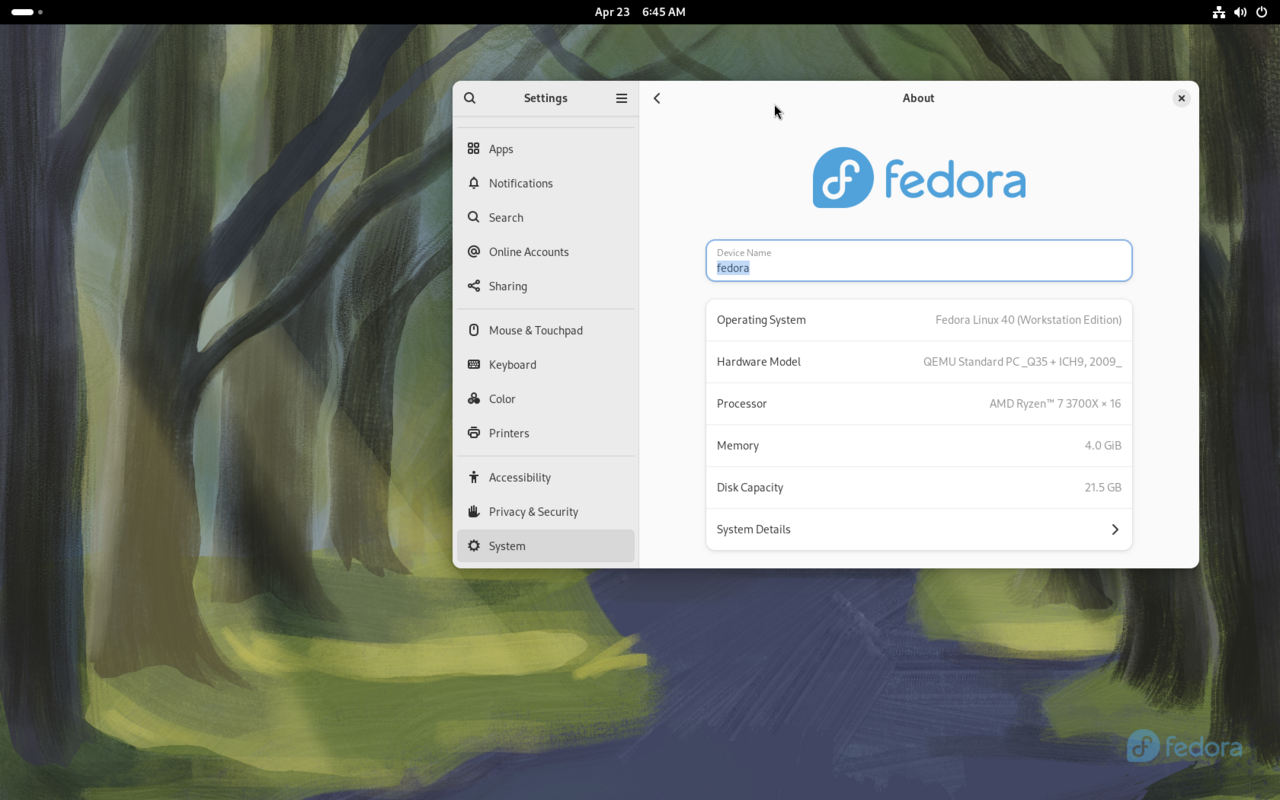
Fedora is divided into Editions targeted at different use cases: Workstation (GNOME desktop, the flagship), KDE Spin, Server, IoT, Cloud, CoreOS (immutable container host), and Silverblue (immutable desktop). The Workstation edition is particularly notable for its long-running role as a leading- edge desktop Linux — early Wayland adoption, GNOME's reference implementation, PipeWire defaults, and frequent kernel updates.
The Fedora Project is governed by the Fedora Council with volunteer leadership and Red Hat sponsorship. Packaging is strict about software freedom — non-free software (proprietary codecs, NVIDIA drivers) ships through the third-party RPM Fusion repository rather than Fedora's own. The combination of recent software, strict free-software policy, and Red Hat backing has made Fedora a default for many open-source developers.
License: Composite (GPL, MIT, BSD, etc.) per package
Category: Distribution
Website: https://fedoraproject.org/
Install
Download an ISO from https://fedoraproject.org/workstation/download
Or in a container:
  docker run -it fedora:latest bash
Authors
- Fedora Project (community) and Red Hat
